
You invest millions in production and forget the warehouse: anatomy of a slow bleed.
New production line, increased capacity — and yesterday's warehouse. How factory success turns into a financial bleed in logistics.
New production line, increased capacity — and yesterday's warehouse. How factory success turns into a financial bleed in logistics.
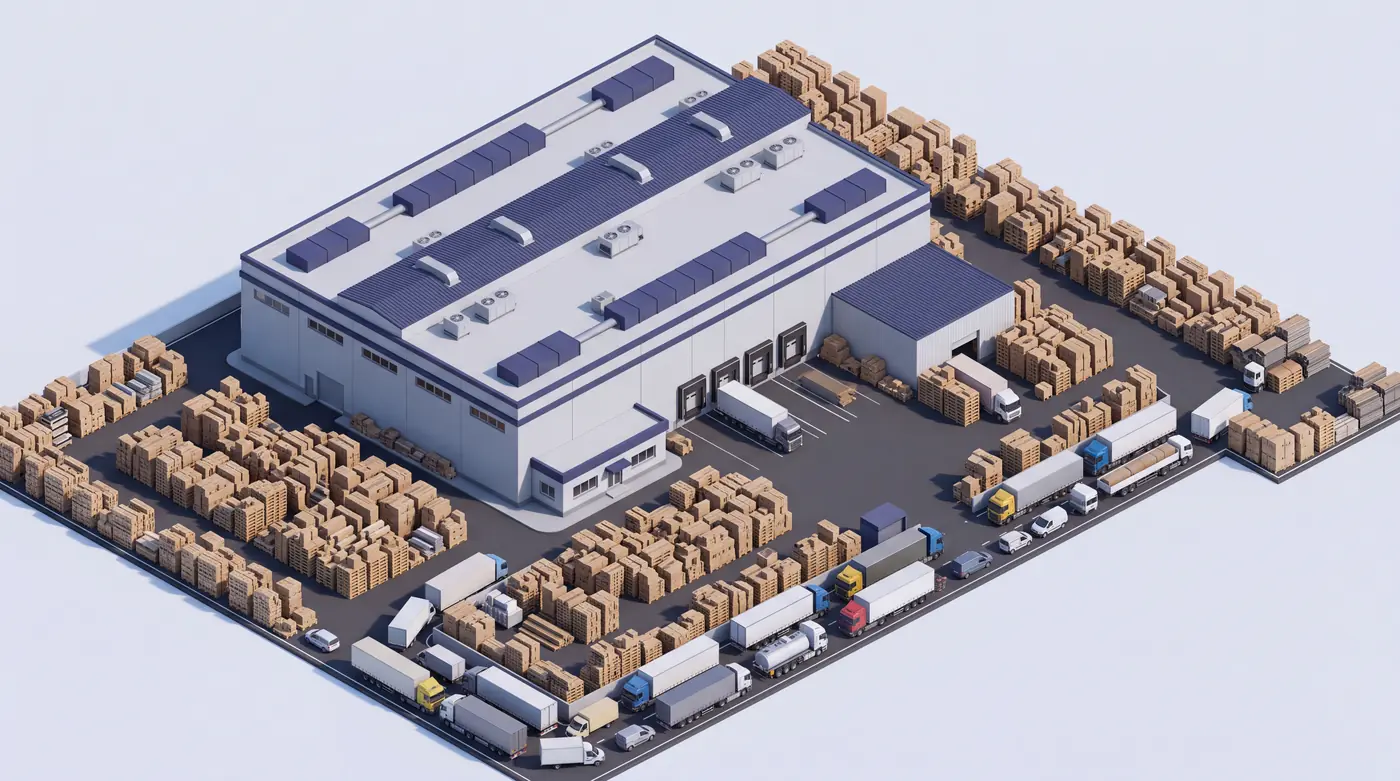
There's a pattern that repeats often enough to deserve a name. A company announces a serious investment: a new production line, an expanded facility, capacity up 30-40%. The press release talks about equipment, technology, jobs. About the warehouse — a paragraph, or nothing. Eighteen months later, the new line produces exactly what was promised. And pallets sit in the warehouse aisles, in the shipping area, sometimes right in the production hall — because goods are made faster than they can be stored, and the warehouse is still sized for the factory that came before.
From that moment on, the company starts paying. Not one big, visible invoice, but a bleed of small, monthly invoices that never stop: rent on an external warehouse, trucks shuttling between the factory and it, people handling the same goods twice, inventory errors between two locations, goods touched too many times. None of this shows up in the initial investment business case. All of it shows up in the accounts of the years that follow.
This article describes the anatomy of that mistake — why it happens, what the real bill looks like, and why the only moment it can be solved cheaply is exactly the moment almost no one thinks about it: the project stage of the production investment.
The cause isn't incompetence. It's a deeply rooted perception asymmetry: production generates revenue, so it gets attention, budget, and engineering; the warehouse "just holds the goods," so it gets what's left. Italian logistics literature has a phrase that captures its status perfectly: male necessario — the necessary evil. And you don't design a project for the necessary evil; you just make room for it.
The practical consequence: when a capacity increase is planned, capacity is defined almost always in terms of equipment — how many tons, how many units, how many lines. But the chain doesn't end at the end of the line. Every extra percentage point of production means more pallets that must be received, stored, rotated correctly, and shipped — that is, logistics throughput, not just storage volume. The real constraint of an expanded factory is rarely the new equipment; it's often the space and the flow behind it — exactly the component that never got engineered.
There's a second, subtler cause: timing. Logistics gets called into the project late — after the site is chosen, the buildings designed, the contracts signed. At that point, the good options are already closed off, and all that's left are improvisations: "we'll add more racking," "we'll rent something nearby," "we'll figure it out after launch." Investments made in a crisis, after launch, cost systematically more than the same investments planned ahead — they're bought fast, under pressure, without real bidding and without design work.
Stage 1: the full warehouse that still "works." There's a rule of thumb often cited in the industry: above 85-90% occupancy, a warehouse becomes inefficient before it actually runs out of space. Every new pallet requires moving others, aisles narrow with "temporary" stacks, search time increases, and handling productivity drops right when volume is rising. From the outside, everything looks fine — the goods fit. From the inside, every operation takes longer than it did a year ago.
Stage 2: goods spill out of the warehouse — inside the factory. Pallets take over the aisles, then the shipping area, then the corners of the production hall. This is the stage with the most treacherous cost: international case studies document the exact scenario where line supervisors end up stopping production to make room for pallets that have nowhere left to go. A multimillion investment in production capacity gets physically throttled by square meters of storage — the equipment can run, but there's nowhere to put the output. At the same time, the congestion brings everything we described in the article about safety: blocked aisles, maneuvers in unsuitable spaces, damaged goods, risks to people.
Stage 3: the external warehouse and the shuttle. The crisis fix is always the same: rent external space — at a freight forwarder, at a logistics operator, in an available building a few kilometers away. On paper, the problem is solved. In reality, this is exactly when the systematic bleed begins, because the external warehouse doesn't just add rent; it adds a whole layer of operations that didn't exist before. Every pallet that passes through it is loaded onto a truck at the factory, transported, unloaded, stored, then — at shipping — loaded again, transported back or straight to the customer, unloaded. Two to four extra handling steps and one to two truck runs for goods that, in a properly sized warehouse, would have traveled a hundred meters on the forks of a single vehicle.
Stage 4: temporary becomes permanent. The "few months" rental gets extended year after year, because production doesn't scale back down. The new fixed costs — rent, shuttle runs, staff at the secondary location — become part of the cost structure and are hard to unwind. And the organization gets used to it: the bleed becomes a budget line, it gets called "external logistics costs," and nobody questions it anymore. This is the point where the project-stage mistake has permanently turned into a fixed tax on every pallet produced.
It's worth breaking down the bill, because the number in the lease contract is the smallest part:
The irony of the whole story is that the solutions exist and are mature — but each one is dramatically cheaper and better if it enters the project alongside the production investment, not after.
Vertical instead of horizontal. Land next to the factory is limited and expensive — but there's room above the warehouse. A self-supporting high-bay warehouse, which we wrote about in detail, stores vertically what would otherwise sprawl across hectares, and is sized from scratch to exactly match the throughput of the new production capacity. Designed alongside the factory, it shares infrastructure, flows, and software with it; designed afterward, it's open-heart surgery.
Density instead of extra square meters. Often the missing capacity doesn't require any construction: the same buildings, with deep-lane storage, narrow aisles, or the right channel configuration — we covered all the options in our guide to storage types — can hold significantly more pallets than classic selective racking. But choosing the right configuration takes exactly the data that's abundant at the project stage: items, batches, throughput, rotation.
A designed flow, not an inherited one. When logistics enters the project at the same time as production, the end of the line, internal transport, storage, and shipping are designed as a single flow — from the packaging line to the truck. When it enters afterward, every element gets grafted onto constraints already poured in concrete. The difference isn't a matter of percentages; it's a difference in kind.
And the golden rule, if there is one: the moment you announce the production investment is the moment the logistics project begins. Not after commissioning, not at the first seasonal peak that overflows — in the same design stage, using the same data, with the same engineering rigor. Every month of delay past this point gets paid back later in years of shuttling.
If you recognize more than two of the following, the bleed has already started — the only question is which stage you're in:
Each of these signs has a cost that can be calculated — you can estimate some of them right now, on your own numbers, with our cost calculator. And if you're in the lucky stage — the one where the production investment is just taking shape — then you have, right in front of you, the window where all of this gets solved at the design stage, not through fixes. It's the shortest and most valuable window in a factory's entire life cycle.
Planning a production investment? This is exactly the moment to size the logistics too — using the same data, in the same stage. Request analysis →
Because every percentage point of added production capacity generates more pallets that must be received, stored, rotated, and shipped — and if the warehouse and flows stay the same, the difference is paid for in inefficiency, rented external space, internal transport between locations, and double handling.
The rule of thumb often cited in the industry: above 85-90% occupancy, a warehouse becomes inefficient before it actually runs out of space — every new pallet requires moving others, operating times increase, and productivity drops right when volume is at its peak.
More than the rent: every pallet that passes through it adds two to four extra handling steps, truck runs between locations, damage risk at every touch, inventory records split across two systems, and rotation (FIFO/FEFO) that's hard to control. The rent is the visible part; the layer of extra operations is the expensive part.
At the same time as designing production capacity — using the same data and in the same stage. Designed alongside the factory, logistics shares infrastructure, flows, and software with production; added after commissioning, it gets grafted onto constraints already built, at systematically higher costs.
Often yes: switching from selective racking to dense configurations (deep-lane racking with satellite shuttles, narrow aisles) or making better use of existing height can significantly increase the number of positions in the same building. The right choice is calculated from real data: items, batches, throughput, and stock rotation.
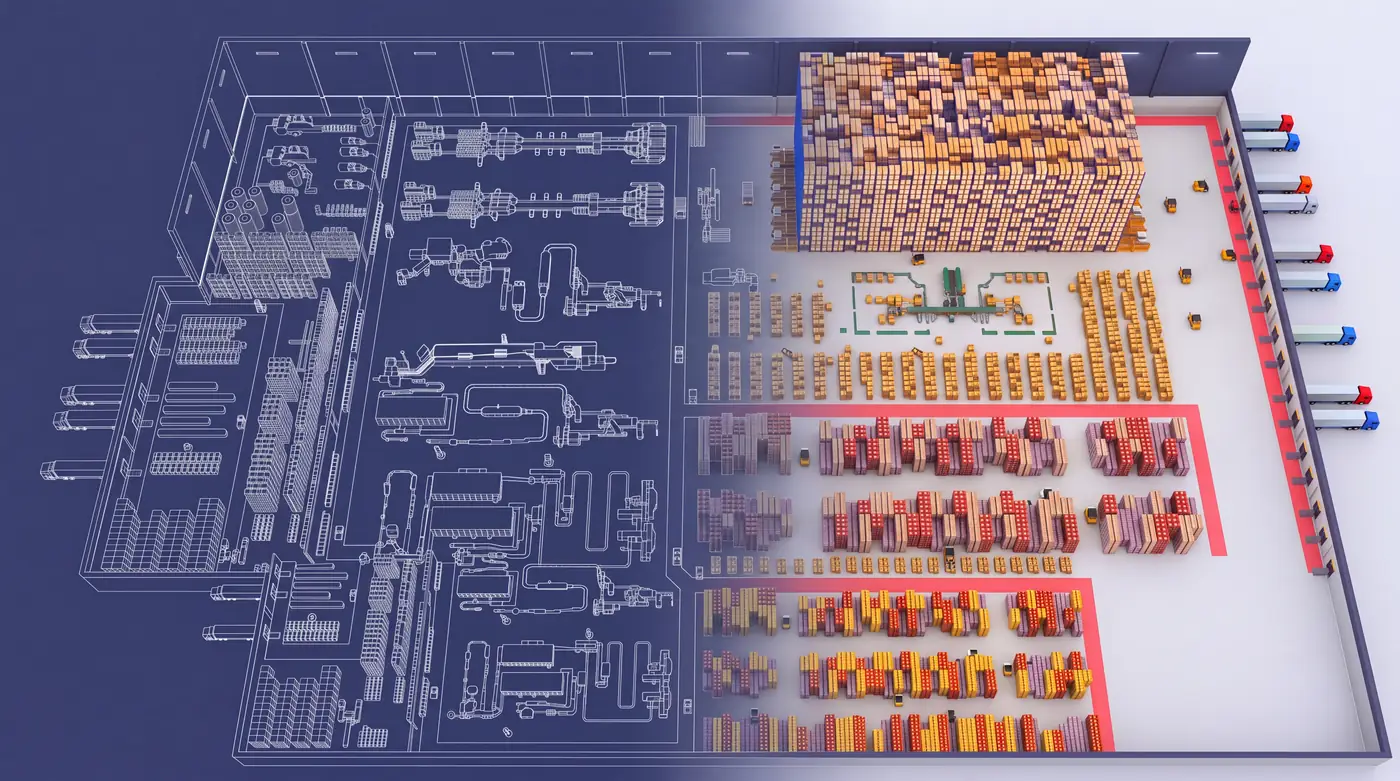
Why nobody can give you an honest price without your data — and which variables actually decide the investment.
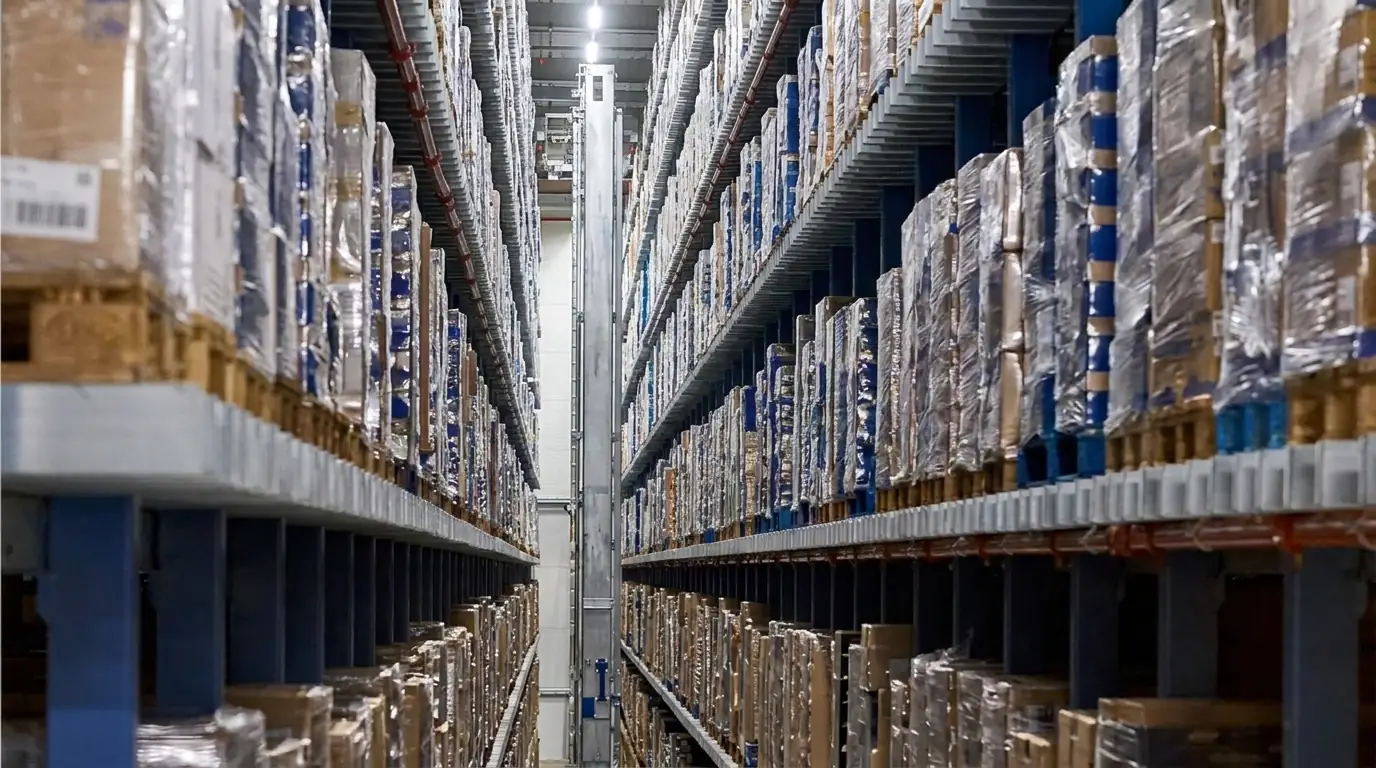
Vertical instead of horizontal: self-supporting structure sized to the throughput of the new capacity.
This is exactly the moment to size the logistics too — using the same data, in the same stage. An analysis done before the concrete is poured costs less than fixes made after launch.
Request analysis