
01
Operational efficiency
Constant flow, with no stoppages at shift change. The same vehicles cover the entire chain, coordinated from a single platform.
How do you make sure the right product reaches the right place, on time?
LogiPath is the local Romanian partner of international manufacturers and integrators of autonomous transport systems for factories and distribution centres. Guided autonomous vehicles — AGV / LGV — that interconnect and optimize the movement of goods: raw material receiving, interphase handling, storage, and truck loading. Precise navigation, energy-efficient batteries for continuous operation, and a layout designed around your data, validated through simulation. Whether it's a new greenfield project or an existing brownfield facility, it integrates with what you already have, without stopping operations.
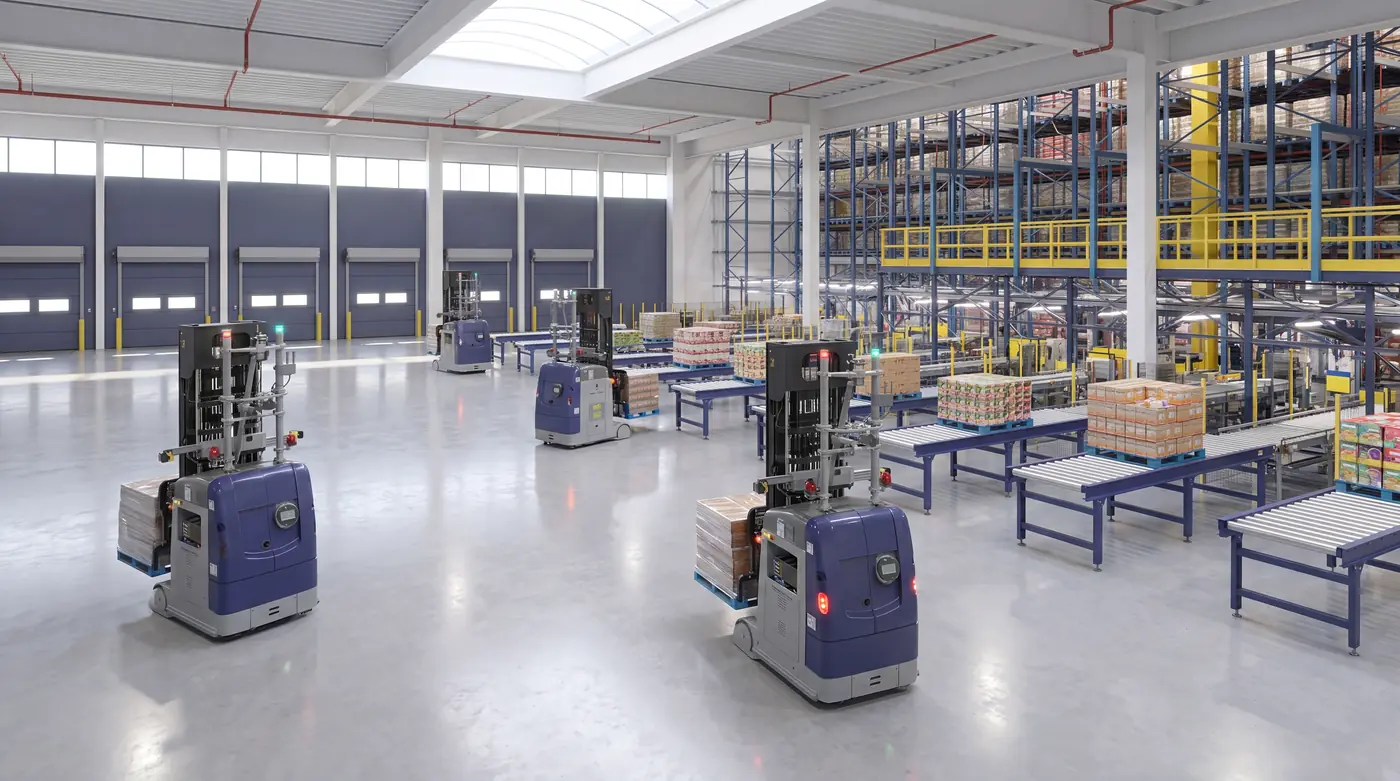
AGV/LGV systems moves goods without a driver, along software-coordinated routes, from raw material receiving to truck loading. A single fleet serves multiple zones at once — receiving, production, warehouse, shipping — with precise navigation, safety compliant with the ISO 3691-4 standard, and continuous operation.
The same AGV / LGV vehicles cover the entire pallet movement chain, coordinated from a single platform:
The vehicles move around the clock across large areas — around the lines, through the warehouse, and at the loading docks. Stopping the line doesn't necessarily stop the vehicles, so safety is designed in from the start, with multiple complementary layers.
Constant flow, with no stoppages at shift change. The same vehicles cover the entire chain, coordinated from a single platform.
No human-driven forklifts in crowded areas. Multiple safety layers, fewer incidents, less downtime.
Add vehicles as you grow and change missions from the software. The system adapts to new flows and products.
Fewer staff on repetitive operations, 24/7 operation, very high accuracy on every transport mission, and the elimination of manual work in traffic areas — the savings show up in every shift, and operator exposure to accidents drops dramatically.
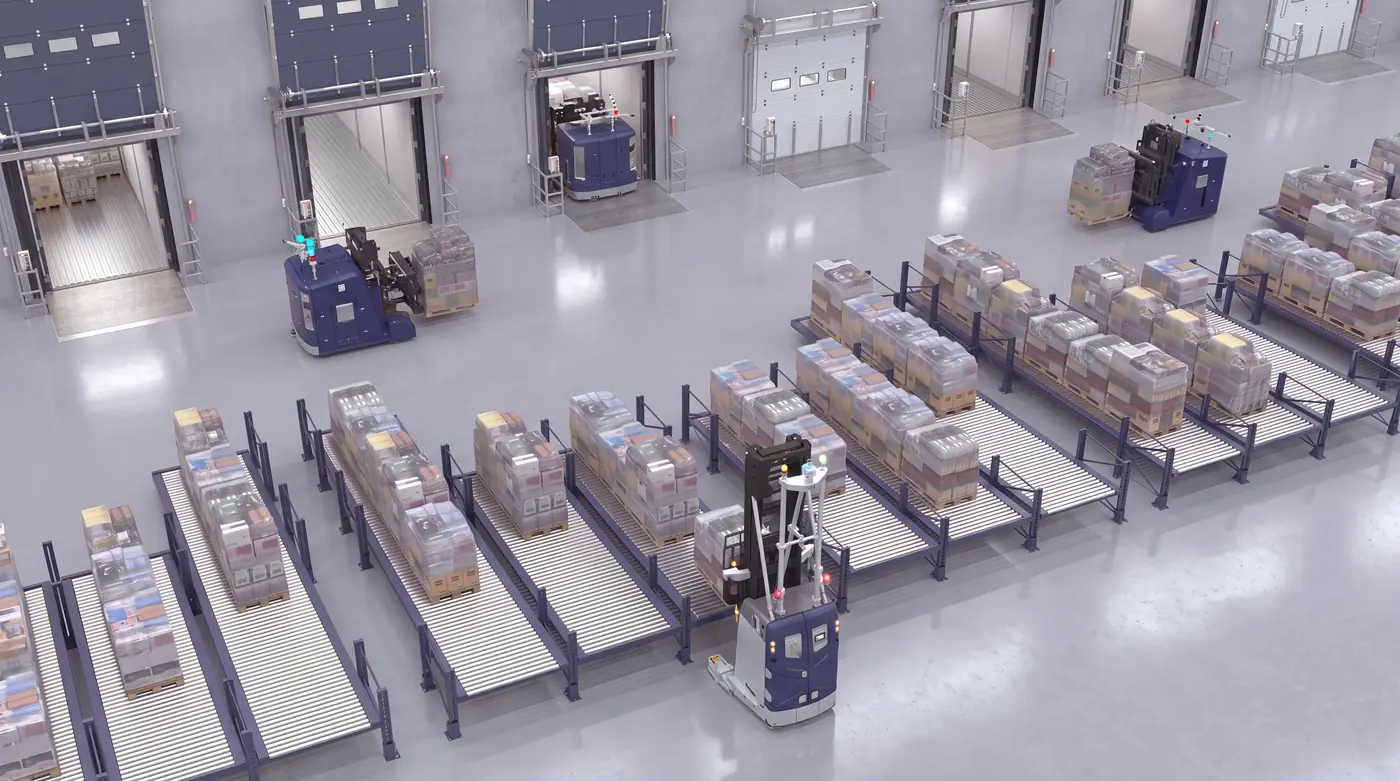
Autonomous vehicles unload pallets from trucks at receiving and load them at shipping, with no forklift operator and no one in the maneuvering zone. Automated unloading is the entry point into the whole flow, and loading is the final step toward full integration — both stay continuous even during traffic peaks.
Interfacing with every storage type increases flexibility and optimizes space. We choose the configuration based on your product and goals:
Each vehicle does its job, but the value comes from how everything connects: their movement is coordinated in real time by the orchestration layer, which communicates with the production lines, the automated warehouse, and your ERP. That gives you continuous flow from receiving to shipping, full traceability for every pallet, and a single accountable platform — not equipment that doesn't talk to each other.
AGV/LGV (autonomous guided vehicles) are driverless vehicles that move goods: handling finished products and raw materials, feeding the lines, transferring to the warehouse, servicing picking areas, and loading/unloading trucks.
The vehicles use continuous perception (laser, cameras, sensors) with an anti-collision system, plus additional protection layers in areas with operators, including where there's no direct visibility.
Yes. Autonomous vehicles unload pallets from trucks at receiving and load them at shipping, with no operator in the maneuvering zone, maintaining continuous flow even at peak.
Free assessment, based on your data. We'll show you what can be automated, in what order, and with what returns.
Request an analysis