
How much does warehouse automation cost?
Why no one can give you an honest price without your data — and which variables actually decide the investment.
Why no one can give you an honest price without your data — and which variables actually decide the investment.
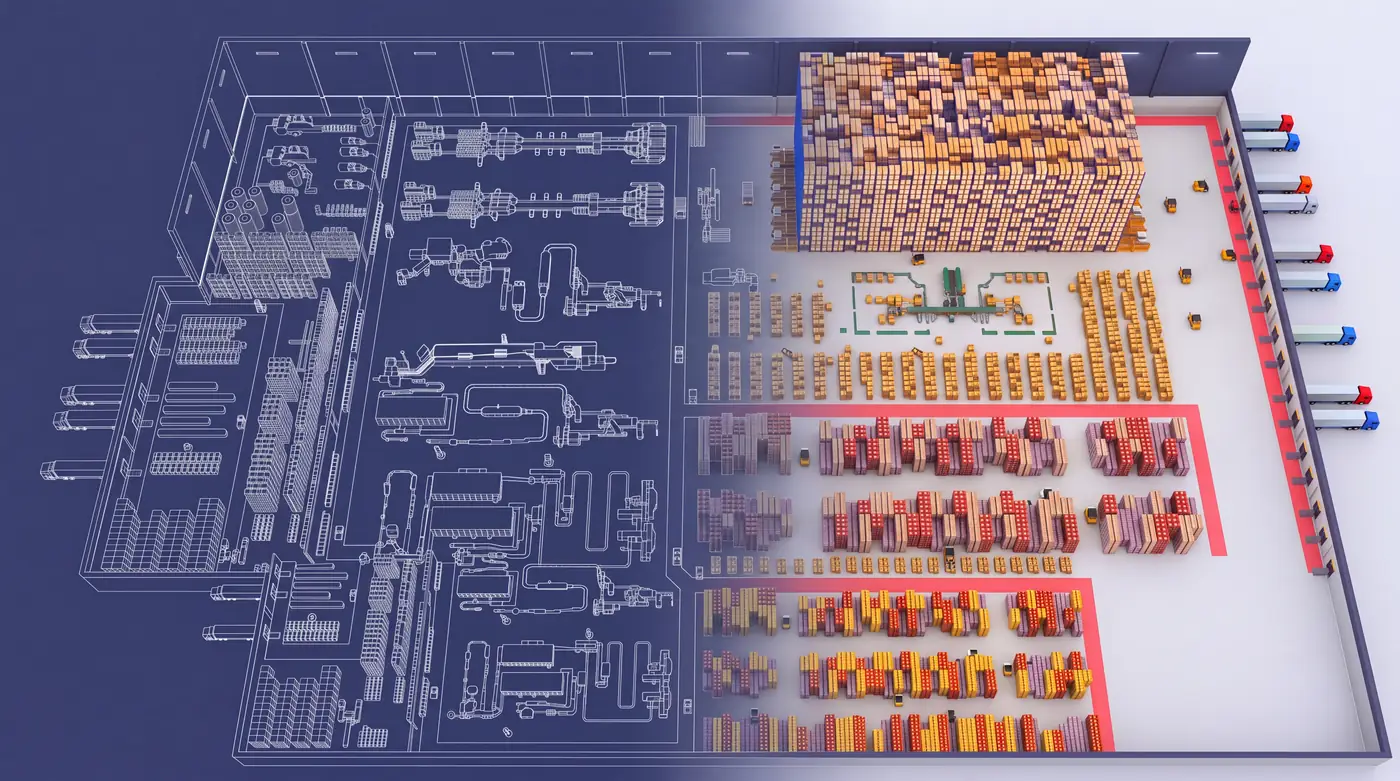
It's the first question anyone considering automation asks. And it's the only one where a quick answer should give you pause: anyone who quotes you a price without asking for your data has given you the wrong price. Either too high, to cover themselves. Or too low, to hook you — and correct it later.
This isn't a dodge. It's the nature of these systems. Here's why.
Take a concrete example: a warehouse with 5,000 pallets, served by autonomous vehicles. How much does it cost?
Impossible to say — because 5,000 pallets is a capacity, and the investment is dictated by throughput: how many pallets move in and out per hour. The same warehouse can run with a single vehicle or with ten, depending on how intensely goods move. The difference in investment between the two scenarios isn't a matter of percentages — it's a multiple.
The right first question isn't "how much do you store," but "how much do you move, at peak."
The number of SKUs decides two expensive things.
First, storage technology: a large assortment with fast turnover requires selectivity (direct access to every pallet); few SKUs in high volumes allow maximum density. Different technologies, different costs.
Then — and this is where quick quotes hide the real cost — software complexity. Orchestrating a flow with 50 SKUs versus one with 5,000 are different products: rotation rules, sequencing, prioritization, WMS/ERP integration. The hardware shows up in the quote. The software that makes the hardware work correctly shows up in operation.
One principle holds everywhere: the system is sized for the maximum number of missions it needs to cover — the peak, not the average of a quiet day.
A properly sized system is judged on cost per pallet moved, not on purchase price: labor hours saved every shift, errors and returns eliminated, goods that no longer get damaged, space gained without expansion, 24/7 operation without hard-to-staff night shifts. The investment is measured against what it replaces and what it unlocks — not against the budget of the purchase year. And the work schedule matters here: a system running three shifts, around the clock, pays back its investment far faster than one used a single shift a day — simply because it works more hours every calendar day.
There's only one honest path: your data. How many SKUs, what turnover, what peak throughput, what building constraints, what growth plans. Scenarios get compared through simulation on that data — before a single bolt goes in — and only the simulation tells you whether you need three vehicles or seven, stacker cranes or shuttles, and what return each option delivers.
Does it cost time? A few weeks. But that's the difference between an investment sized correctly the first time and a system you spend years correcting.
Want a real number, for your operation? Start with the data. Request analysis →
A single vehicle's price says little: it depends on the type of goods it carries, the weight and height it lifts them to, the width of the aisles it runs in — and the total investment is dictated by how many vehicles your throughput requires and by the orchestration software. Two projects with the same number of vehicles can have very different costs.
It depends on what it replaces: three-shift labor costs, errors, damage, and the space gained. Properly sized projects typically recover their investment within a few years — but the real number only comes from calculating against your own operation's data.
An order of magnitude — yes, after an initial conversation and a few basic data points. A firm price — no, and you should be skeptical of anyone who offers one without knowing your operation.
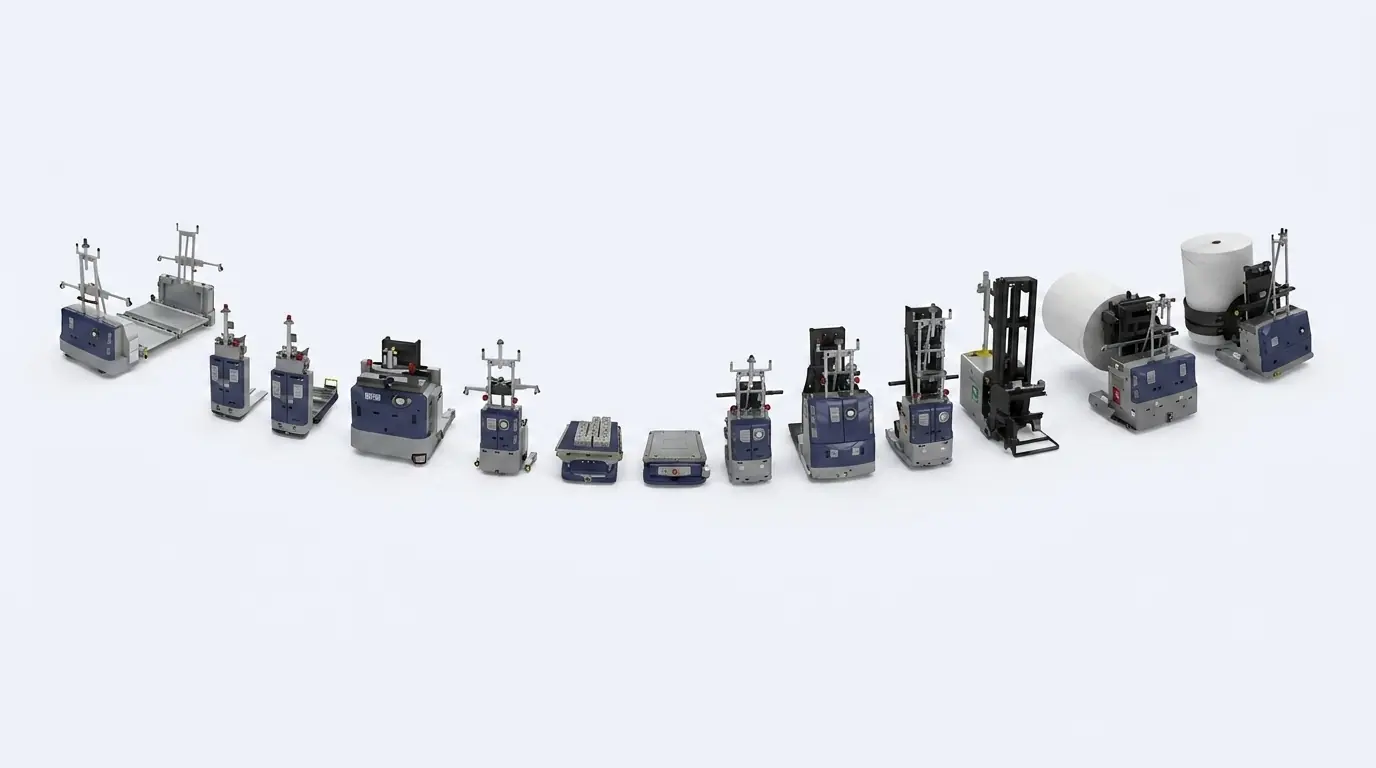
How autonomous vehicles work, what forms they take, and why there's no such thing as "a standard AGV."
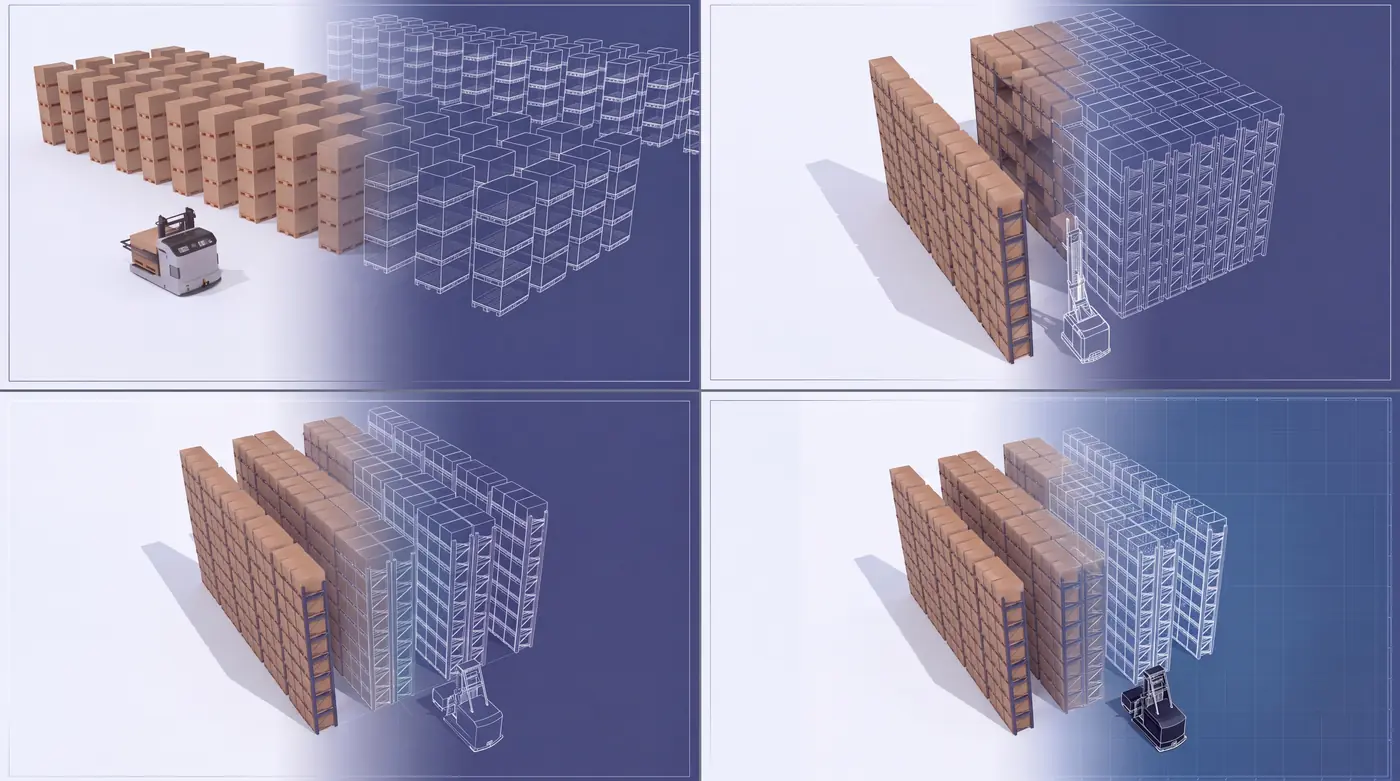
Single-deep, double-deep, drive-in, gravity, shuttle, or floor block — a guide to rack types.
Free assessment, based on your data. We'll show you what can be automated, in what order, and with what return.
Request analysis