
What is an AGV? Vehicle types, loads, and customization.
Quick guide: how autonomous vehicles work, what forms they take, and why there is no “standard AGV.”
Quick guide: how autonomous vehicles work, what forms they take, and why there is no “standard AGV.”
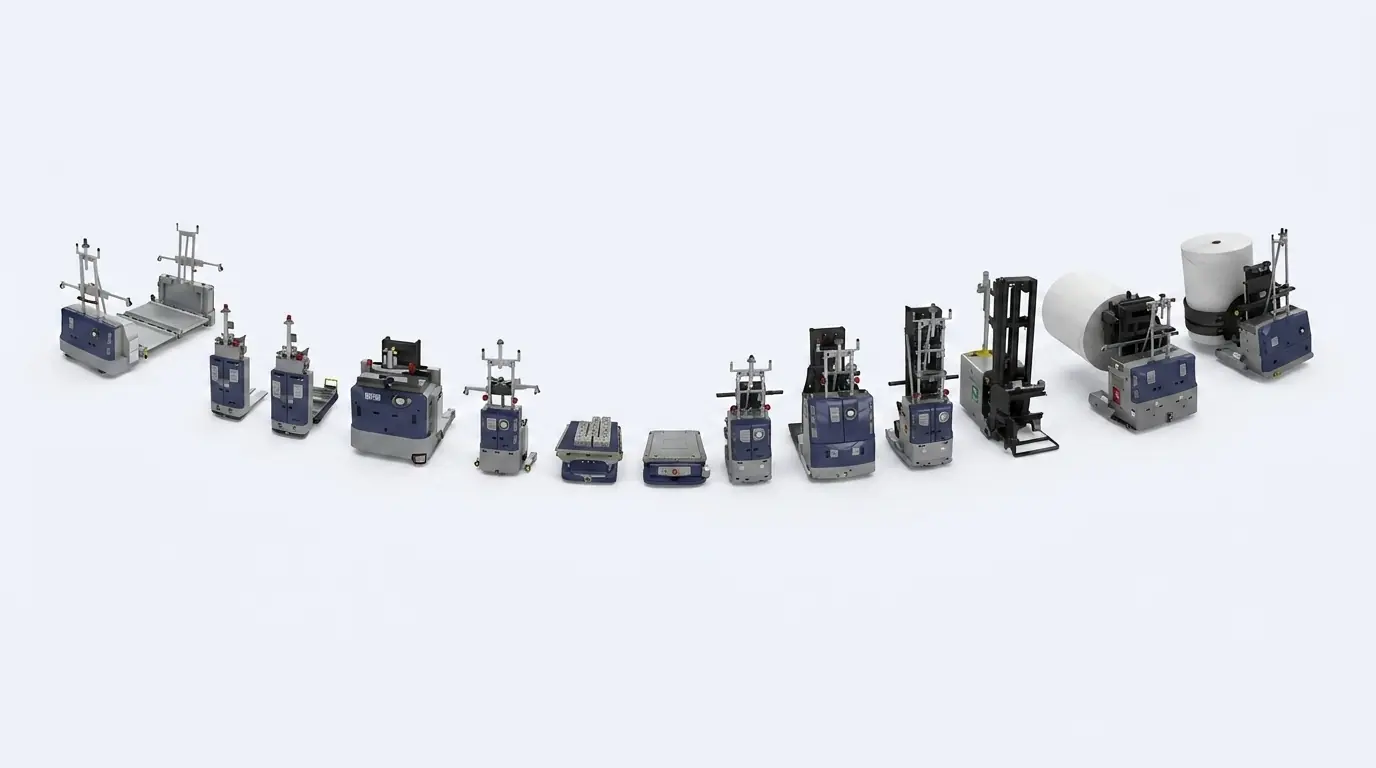
An AGV (Automated Guided Vehicle) is a vehicle that moves goods without a driver: it receives missions from coordination software, navigates the warehouse or plant on its own, and handles the load with precision — around the clock, at the same pace, every shift.
That's the definition. It gets interesting once you dig into the details — because “AGV” is an entire family of vehicles, not a single product.
The terms get mixed up often, so let's sort them out:
For industrial pallet flows — production, warehousing, shipping — LGVs form the backbone.
| Type | Navigation | Typical load | Best suited for |
|---|---|---|---|
| LGV | Laser (industrial precision) | Full pallets, heavy loads | Plants, pallet warehouses, 24/7 |
| Classic AGV | Magnetic tape / reflectors | Fixed routes, medium loads | Simple, repetitive flows |
| AMR | SLAM (sensors + dynamic maps) | Cases, lightweight containers | E-commerce, variable flows |
The family covers virtually every form of handling:
In a real system, the types combine: pallet trucks on transfers, forklifts for storage, unit-load vehicles at the line ends — all coordinated by the same software.
The same fleet can take on, from one end of the operation to the other:
This is what sets it apart from almost any other equipment on the floor: an AGV isn't tied to one zone. In the morning it unloads raw materials, at noon it feeds the lines, in the evening it loads shipments — the same investment works wherever it's needed.
Standard vehicles handle all the usual pallet types — EURO, CHEP, industrial, block, or stringer — and this is where the less-known part begins: the vehicle adapts to your goods, not the other way around.
That's why the right question at the start of a project isn't “what vehicles do you have in your catalog,” but “what goods do you move, at what pace, through what spaces” — and the vehicles are configured to the answer.
A single AGV is just a piece of equipment. The value appears when the fleet works in a coordinated way: orchestration software distributes missions in real time, the vehicles share tasks among themselves, and if one stops, the rest take over. Connected to the WMS/ERP, the system knows where every pallet is at every second — full traceability, from receiving to shipping.
Want to see what a fleet sized for your operation would look like? Request analysis →
The AGV follows defined paths, with industrial-precision navigation (laser, in the case of LGVs) — the standard for pallets and heavy loads. The AMR navigates freely, on sensor-built maps, and is typically used for lighter loads. For industrial pallet flows, the LGV remains the reference.
Yes — there are configurations for refrigerated and frozen environments, down to -25°C and below. These are among the applications where automation delivers the greatest gains, because human labor in the cold is difficult and expensive.
The rest of the fleet takes over its missions, and the system keeps running at slightly reduced capacity — it doesn't stop. This is one of the major differences versus fixed equipment, where a single breakdown blocks the entire flow.
Yes. The vehicles continuously sense their environment (laser, cameras, sensors) and carry safety layers beyond international standards, including for zones with reduced visibility. Coexistence with mixed traffic is the rule, not the exception.
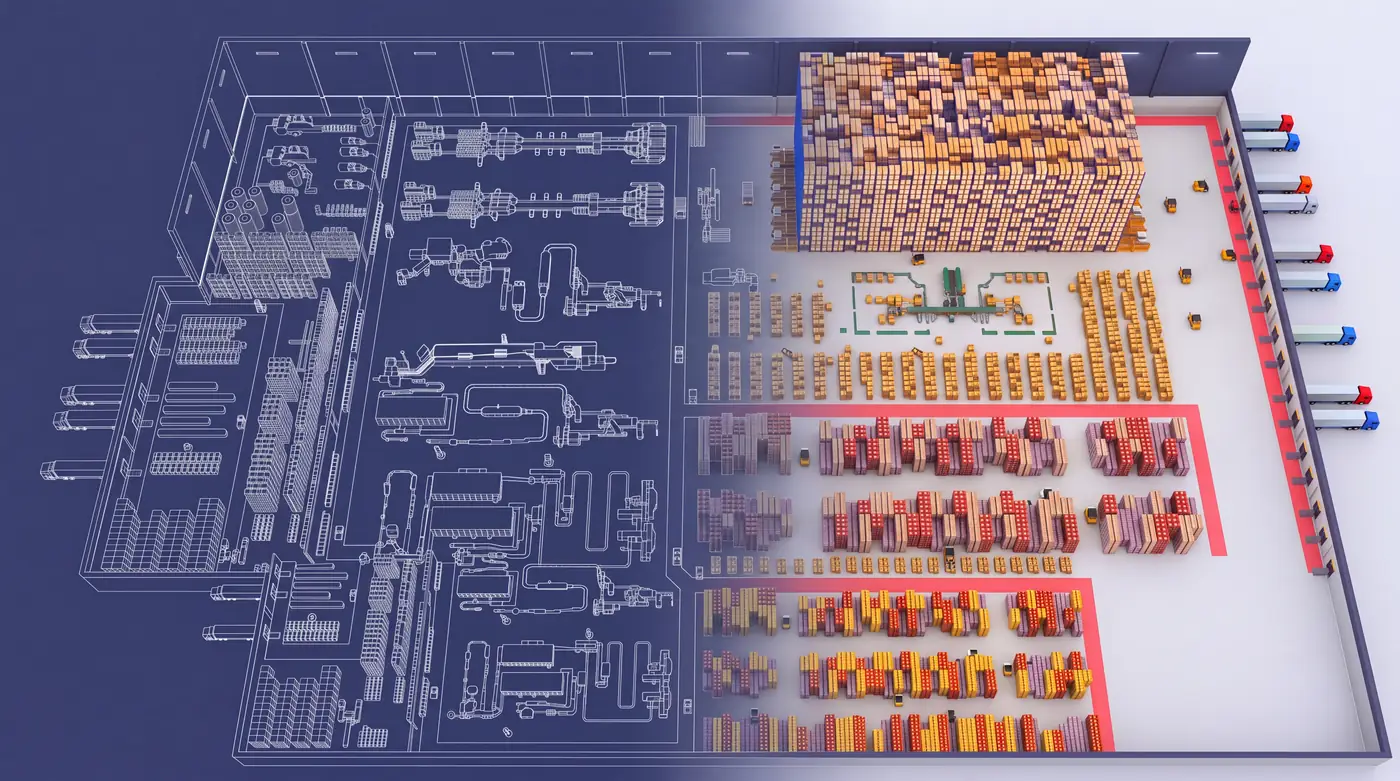
Why no one can give you an honest price without your data — and which variables actually determine the investment.
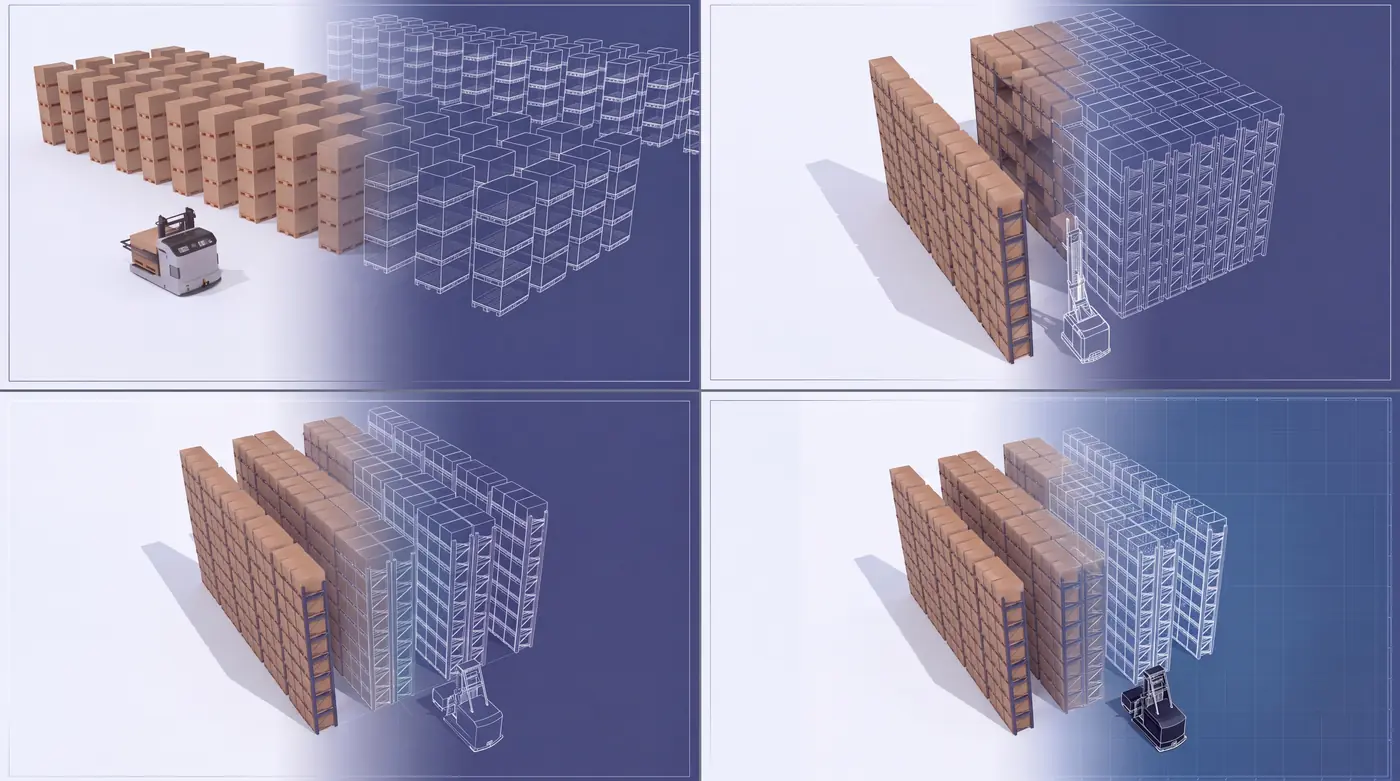
Single-deep, double-deep, drive-in, gravity, shuttle, or floor block — a guide to rack types.
Free assessment, based on your data. We'll show you what can be automated, in what order, and with what returns.
Request analysis