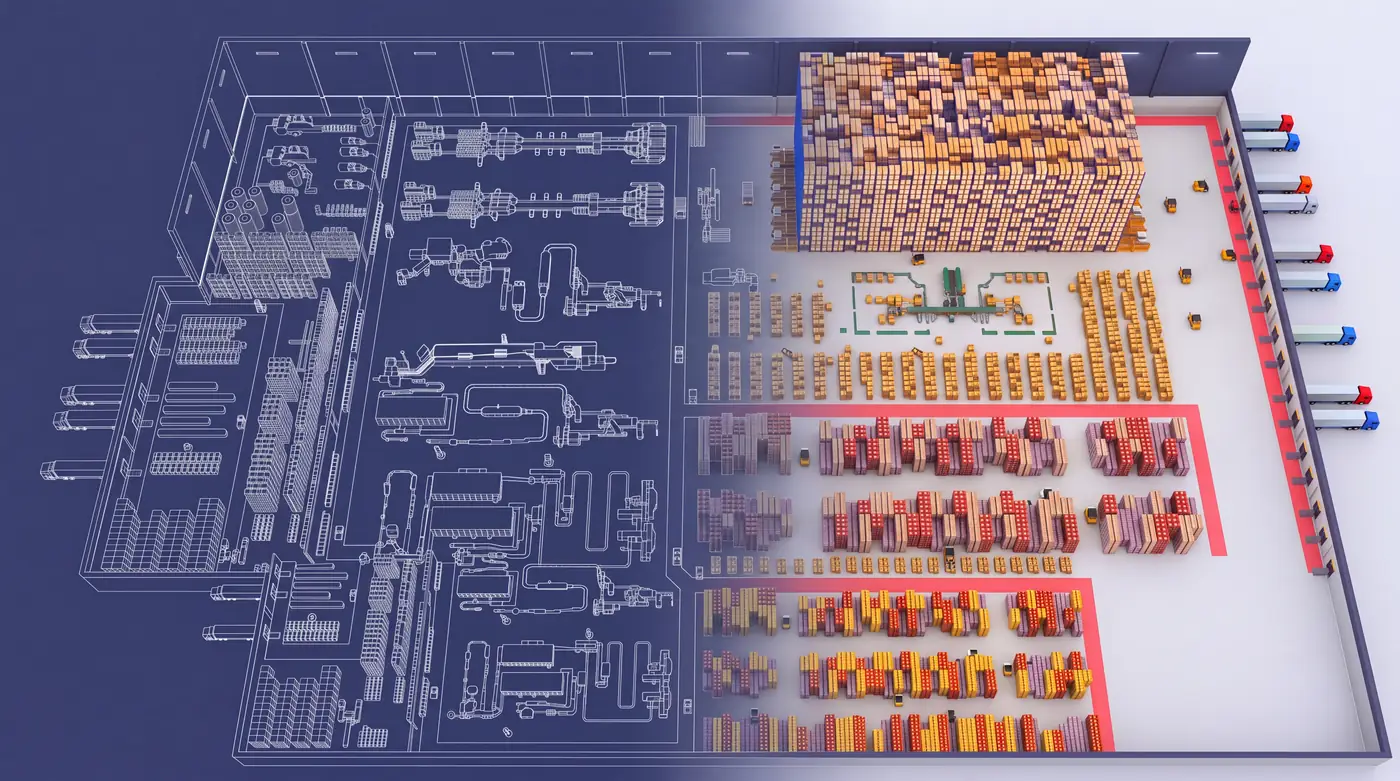
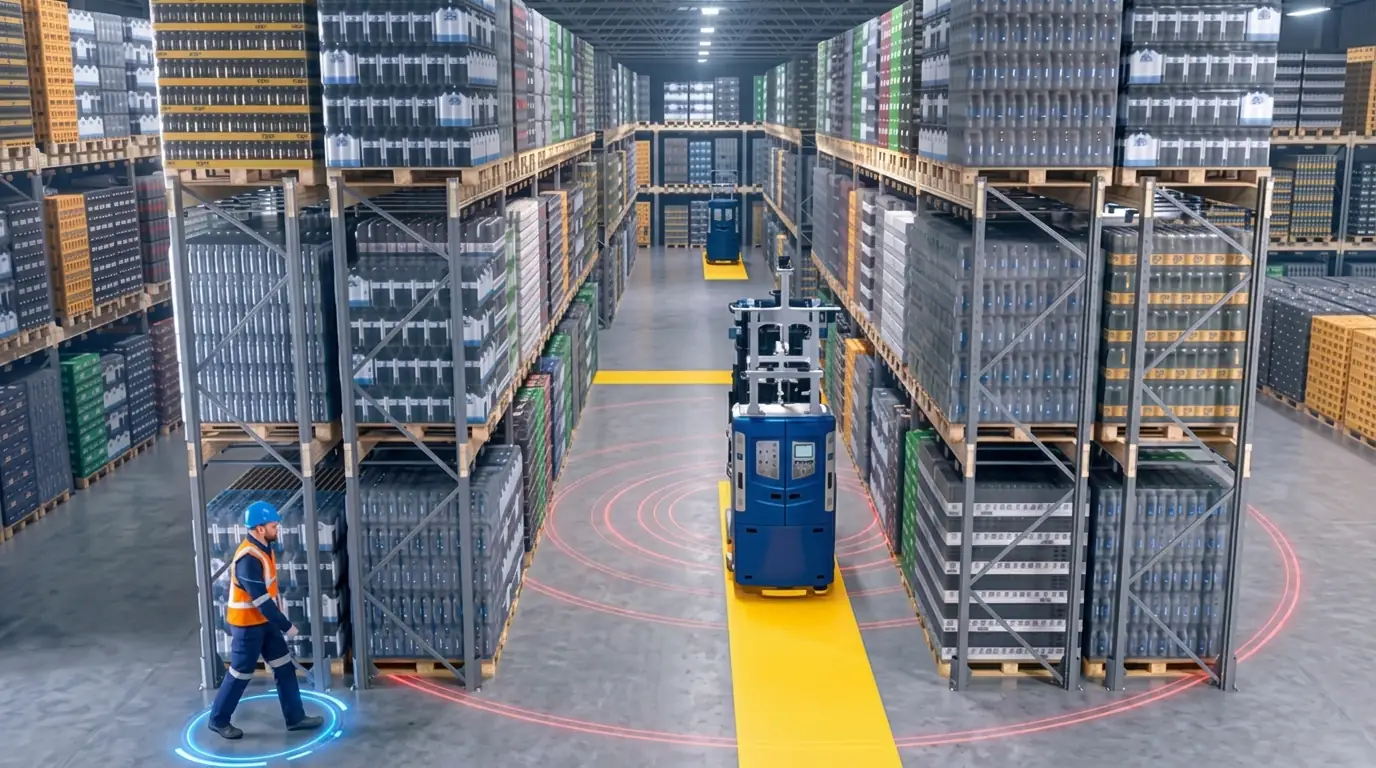
There's a moment in every automation project when three or four bids sit on the table and all of them look good. The renderings are impressive across the board, the presentations are polished, the promised figures are close, and the only visible difference left is price. This is exactly the moment when the most expensive wrong decisions get made — because on paper, the bids really do look the same. But an automation system isn't bought on paper. It's bought for the next 15 years, and over 15 years the difference between suppliers isn't the rendering — it's what happens when the system goes down on a Tuesday at 3 a.m., with 12 trucks scheduled at the dock.
There's another stake here, one rarely discussed: whoever chooses the supplier is putting their own name on the line. The logistics director or owner who championed the project to management — or to family, in entrepreneurial companies — doesn't just lose money if the choice is wrong. That's why the decision deserves method, not instinct.
This article won't tell you who to buy from. It tells you what questions to ask — the same questions, to every bidder — so the real differences surface on their own.
A crowded market is a trap for the buyer
Warehouse automation has become an attractive market, and like any attractive market, it filled up fast: new integrators, equipment resellers, companies that did something else entirely until yesterday and now promise turnkey projects. Everyone has access to the same presentation tools; everyone can produce a convincing rendering and an animated simulation. The barrier to entry in promising has dropped to nearly zero. The barrier to entry in delivering — a system that runs for years, with service that responds, parts in stock, software that keeps evolving — has stayed just as high.
That creates a dangerous asymmetry: the buyer sees bids that look identical and draws the natural — but wrong — conclusion that the products behind them are comparable. They aren't. And the only way to find the difference before signing — not after — is to move the conversation from marketing ground to evidence ground.
The underlying distinction is simple: for some bidders, your project is a sale to close — and once commissioning is done and the last invoice is paid, their attention moves to the next prospect. For others, your project is a relationship to build, because their business model lives on systems that keep running for years, on expansions, and on referrals. Every question in this article, at bottom, serves one purpose: finding out which category the person across the table belongs to, before you sign.
References: the one currency that can't be faked
Any supplier can tell you what they will do. Only some can show you what they have done. The right question isn't "do you have references?" — everyone has a list of logos. The right question has three parts: what have you implemented at my scale, in my industry, and can I speak directly with the client?
Scale matters because a system with three vehicles and a system with fifty aren't the same product at different sizes — software, traffic, and integration complexity all grow nonlinearly. Industry matters because a beverage warehouse, a frozen-goods warehouse, and a pharma warehouse have completely different constraints. And the direct conversation with the client matters because the real reference isn't the logo on the slide — it's the person who tells you, with the supplier not in the room, how the implementation actually went, how long it really took, and how service responds today, years after commissioning.
The ultimate test is still the site visit: a serious supplier doesn't just agree to show you a system in production at a real client — they insist on it. Anyone who finds reasons why "nothing can be visited right now" has already answered the question.
A low price is expensive: the real cost includes every hour of downtime
This is where most of the money gets lost in automation decisions, because this is where the Excel comparison lies most convincingly. The price difference between two bids is a visible number, written in black and white. The cost of downtime is invisible at signing — and becomes very visible in operation.
Run the math for your own operation, not in the abstract: when the system stops, what stops with it? The production line with nowhere left to unload? Trucks scheduled at the dock, with drivers on demurrage? Retail orders with a fixed delivery window and a late-penalty clause? A single day of downtime can be worth more than the entire price difference between the cheapest and the most expensive bid on the table. And systems never go down conveniently — they go down at peak season, because that's when they're working hardest.
That's why the questions that matter on service aren't "do you have service?" but: how fast does a technician reach me — guaranteed by contract, not promised verbally? Where's the nearest spare parts stock and what does it cover? What response time do you sign in the SLA, and what happens if you miss it? Is there 24/7 support for remote diagnostics? A mature supplier has precise answers to all of it, because they've given those answers hundreds of times. A new one improvises — and the improvising shows.
Supplier solidity: your 15-year insurance policy
An automation system lives 15 years and more. The uncomfortable question, which few people ask at purchase time: will the supplier last just as long? Because an orphaned system — with software nobody develops anymore, with parts nobody manufactures anymore — is a far more expensive problem than any difference in bid price.
There's a simple rule of financial hygiene here: look at the ratio between your project's value and the supplier's annual revenue. If your multi-million-euro project represents half their annual business, you aren't their client — you're their existential risk. Any major problem on your project becomes a survival problem for them, and decisions made under existential pressure rarely favor the client. A solid group, with hundreds of systems installed, its own R&D department, and service organized at network scale, can afford to solve your problem properly — not just fast and cheap.
And for the scenario nobody wants to discuss at signing, but which needs discussing exactly then: what happens to the software and technical documentation if the supplier disappears? Escrow clauses — source code and documentation deposited with a neutral third party, released to you in case of insolvency — exist exactly for this. A supplier who refuses to discuss it is telling you something about their own confidence in their future.
Checklist: 10 questions to ask any bidder
Ask all of them, to everyone, in the same form — and write down the answers. The differences will do the rest.
- What system have you implemented at a scale comparable to mine, in my industry — and can I visit the installation and speak with the client?
- How many years has your oldest implementation been running, and what does its service look like today?
- What did you size the bid on — did you simulate the solution on my actual flow data, or on general estimates?
- What performance guarantees do you sign into the contract — throughput, availability — and what happens if they aren't met?
- What technician response time do you guarantee by contract, not verbally?
- Where is the spare parts stock that serves me, and what does it cover?
- Is service your own or subcontracted? Who actually answers the phone at 3 a.m.?
- How does your software integrate with my WMS and ERP — and who owns that interface in the following years, including when one of the systems gets updated?
- What's the ratio between my project's value and your annual revenue? Do you accept escrow clauses for software and technical documentation?
- What does my team's training include, and what can I resolve myself, without calling you?
None of these questions requires technical expertise. All they require is the discipline not to be swept along by renderings. Questions 3 and 4 go together for a precise reason: a supplier can only guarantee what they've simulated. Whoever offers guarantees without asking for your data is making a promise; whoever asks for your data, simulates, and only then guarantees — delivers.
The bottom line: move the decision from price to risk
Price is a single line in the total cost of a system that works for 15 years. The rest of the lines — downtime, service, parts, supplier solidity, software that has to keep evolving — don't show up in the comparative bid, but they show up, guaranteed, in operation. The right supplier isn't the cheapest, nor automatically the most expensive: it's the one whose answers to the 10 questions hold up when you check them.
And to stay consistent with our own article: ask everyone these questions. Including us.
Want to see what our answers to the 10 questions look like? Let's talk — and bring the list. Request analysis →