
AGVs or conveyors? In 1913, the belt changed the factory. In 2026, it's the belt's turn to be changed.
Why industry leaders are moving flow from fixed belts to fleets of autonomous vehicles — and where the conveyor still has its place.
Why industry leaders are moving flow from fixed belts to fleets of autonomous vehicles — and where the conveyor still has its place.
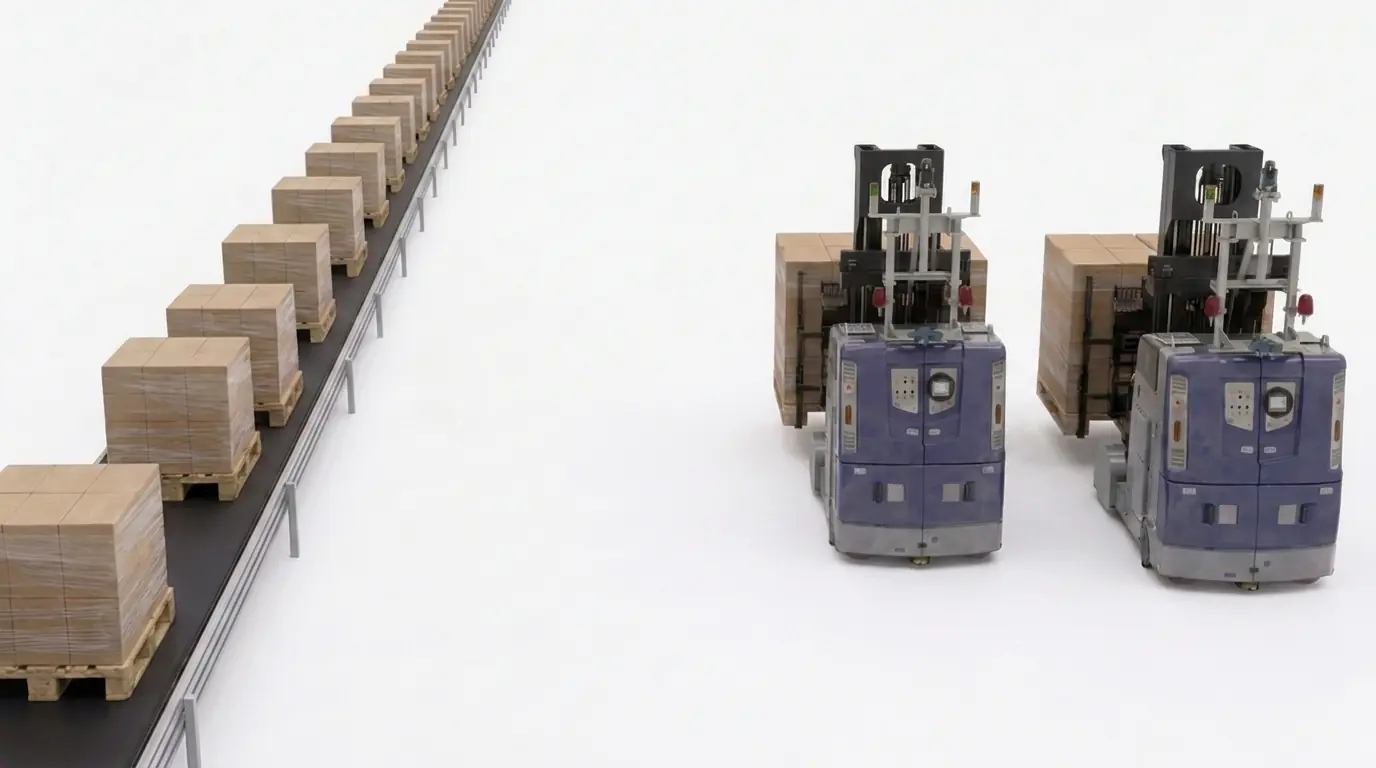
In 1913, Henry Ford put the conveyor belt at the center of his factory — and defined a century of industrial production. It was a revolution of rhythm: goods move, people stay in place.
A century later, the principle turned against itself. The belt imposes a single path, forever — and in a market where assortment, volumes, and channels change every year, rigidity has become the most expensive asset on the floor. That's why leading factories across Europe are pulling the belt out of the center of logistics and replacing it with fleets of autonomous vehicles. Not because the belt didn't work — but because the future demands something other than steel set in concrete.
The conveyor is infrastructure. You fix a path into the floor, and goods run on it — always the same, for as long as the building stands. Any change means dismantling, welding, redesign, and weeks of downtime.
The AGV is a fleet. Vehicles go wherever the software sends them: today on one route, tomorrow on another — the change happens from an office, often in a single day, without touching the building.
You're not comparing two pieces of equipment. You're comparing building rigid with building adaptable.
This is the difference conveyor quotes never put on the table.
A belt connects one point to another: the palletizing line to the wrapper. For every new flow — one more belt, one more structure, one more investment. Covering the whole factory with conveyors means a maze of steel that people can barely move through.
The same AGV fleet does it all: unloads raw materials from the truck, moves them to the warehouse, feeds the lines with materials and packaging, picks up the finished product at the end of the line, stores it, and loads it onto the truck at shipping. One system, the same vehicles, from the inbound gate to the outbound gate.
And the economic consequence: the vehicles don't sit idle. In the morning they unload raw materials, at noon they feed the lines at peak production, in the evening they load shipments. The same investment works across every zone, as the time of day demands. The conveyor in receiving will never help with shipping.
You size a conveyor from the start for the peak five years out — you pay today for capacity you might not use until 2031. With a fleet, you start with the vehicles you need now and add the next one when volume grows. The investment follows the business, not the other way around.
Belts occupy entire corridors and cut the facility into hard-to-reach zones — square footage you pay for with every expansion or lease. Vehicles use existing aisles, which they share with the rest of the operation. At current industrial rates per square foot, freed-up space is a return in itself.
A stopped belt halts the entire downstream flow — the conveyor is a chain with a single critical link. A stopped vehicle means the rest of the fleet takes over its missions, and the system keeps running at slightly reduced capacity. Redundancy is built in, not an option you pay for separately.
A detail that shows up on the bill: the belt runs continuously and draws power constantly — whether it's carrying goods or air. Vehicles draw power on demand, in proportion to workload, and the fleet adapts to the season: in slow months you run half the vehicles, at peak you deploy all of them. Consumption follows the business, just like the investment.
| Criterion | Conveyors | AGV fleet |
|---|---|---|
| Changing the route | Physical redesign, weeks | From software, often in a day |
| Coverage | Point-to-point | The whole factory, receiving → shipping |
| Scaling | Sized for the estimated peak, from the start | Add vehicles as you grow |
| Space | Permanently occupies corridors | Uses existing aisles |
| Failure | Stops the entire downstream flow | The fleet takes over the stopped vehicle's missions |
| Energy consumption | Constant, as long as the belt runs | On demand, proportional to volume |
| Deployment in existing facilities | Major construction work, downtime | Fast commissioning, no operational downtime |
| Initial cost (simple flow) | Can be lower | Usually higher |
| Cost of change | Very high | Minimal |
The belt remains the rational choice in a few precise situations:
That's why mature systems are often hybrid: belts on the short, dense, immovable segments — usually at the end of production lines — and the autonomous fleet for everything else: long distances, flows that change, zones shared with people, the link between receiving, production, warehousing, and shipping.
The difference is one of role: the conveyor is a point-specific component, suited to where the flow is set in stone. The backbone of intralogistics needs the flexibility that only a software-coordinated fleet can provide — and vehicles pick up goods directly from belts, so the two worlds integrate naturally.
Leading FMCG plants — beverage, food, tissue — have been running for years with fleets of dozens or hundreds of autonomous vehicles that link production to shipping without a single meter of belt between them. The question is no longer "if," but "when" — and every year of waiting is a year you pay for rigidity: in occupied space, in downtime, in flows you can't change.
Want to see what your flow would look like on autonomous vehicles? Request analysis →
Upfront, for a simple flow, often yes. But the purchase price is only part of the cost: add the cost of every layout change, the space permanently occupied, and the risk of a total stoppage on failure. Over the system's lifetime, the math changes fundamentally.
Yes — it's a common brownfield scenario: vehicles first take over the new flows or the ones that change often, while belts stay on the fixed segments. The systems coexist and integrate.
It depends on the maximum number of missions the system has to cover at peak — not on the floor area. The right answer comes out of simulation, based on your operation's data.
Usually, significantly less: vehicles require no physical construction along the route, so commissioning is faster and happens without stopping the current operation — a major advantage in existing facilities, where installing a conveyor system means construction work and downtime.
Yes — unit-load vehicles and fork vehicles pick up load units directly from conveyors, palletizers, or the end of the line. Interfacing between the two worlds is standard practice.
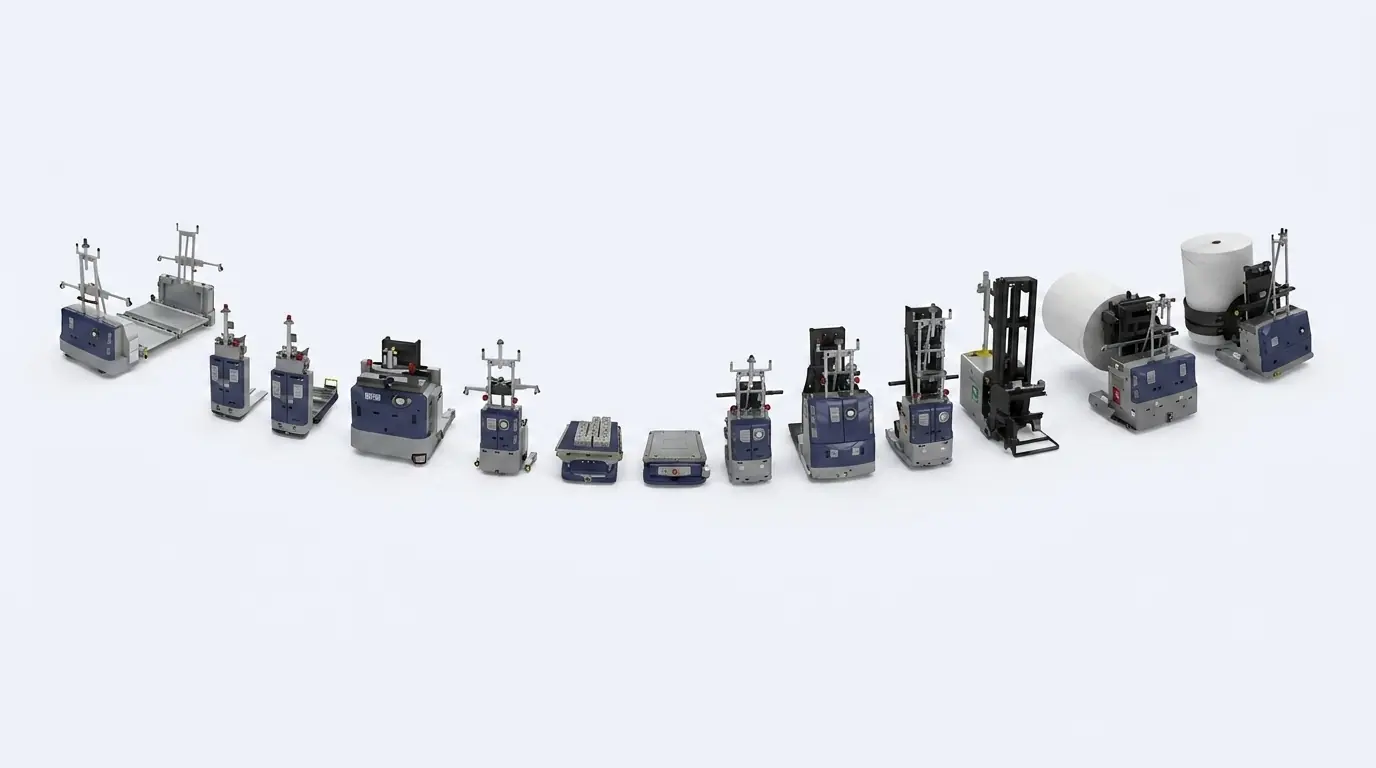
How autonomous vehicles work, what forms they take, and why there's no such thing as "a standard AGV."
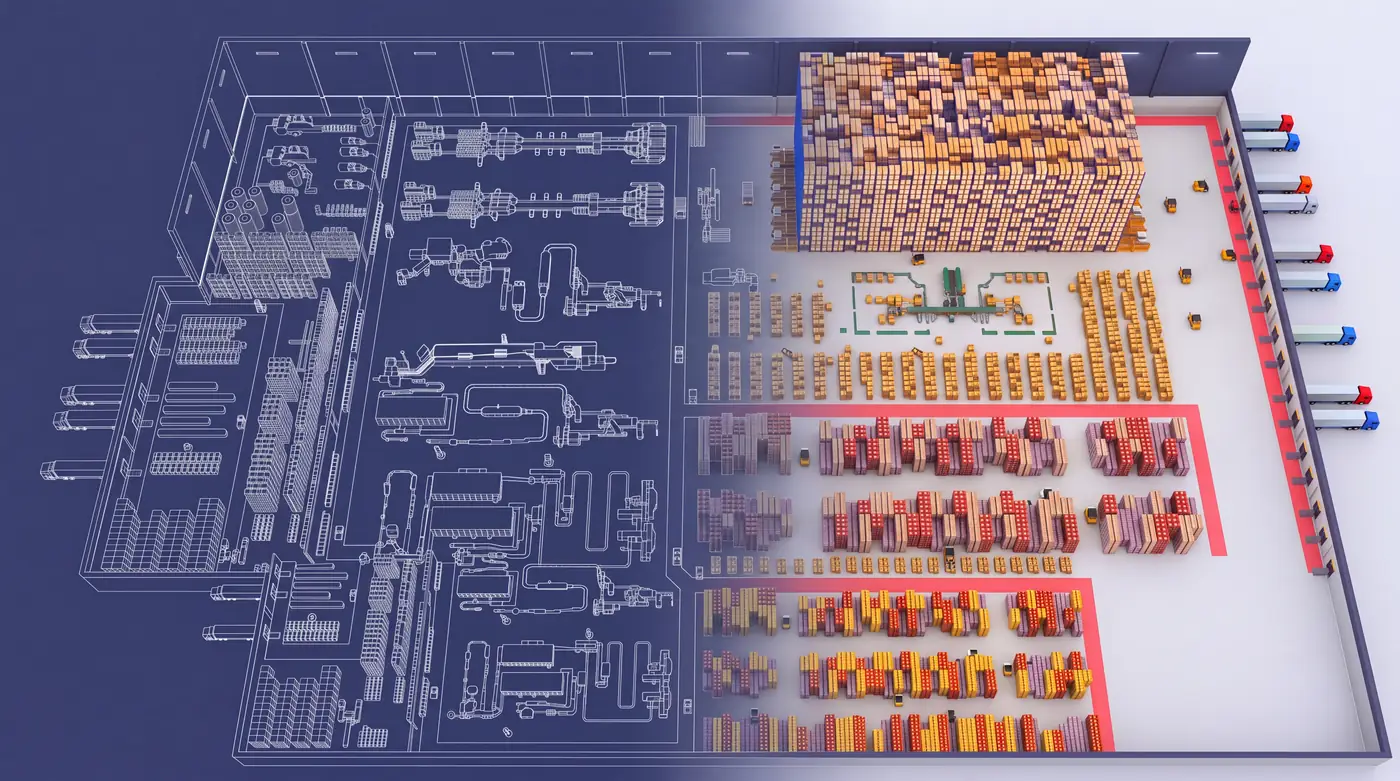
Why nobody can give you an honest price without your data — and which variables actually drive the investment.
Free assessment, based on your data. We'll show you what can be automated, in what order, and with what return.
Request analysis